
A common misconception is that downloading a reputable wallet extension makes a DeFi account safe. It does not. A browser wallet is better understood as a signing instrument: it helps create and approve cryptographic transactions, but it cannot decide whether a protocol is solvent, a token is legitimate, or a transaction reflects your actual intention. Security therefore begins before installation and continues every time a transaction is reviewed.
For US DeFi users, that distinction matters because the largest losses often arise from ordinary-looking approvals, misleading websites, compromised interfaces, or poorly understood smart-contract permissions rather than from a failure of cryptography. A careful Rabby extension download can be a useful first step, particularly when the wallet presents transaction simulations and risk signals, but the user still supplies the final layer of judgment.
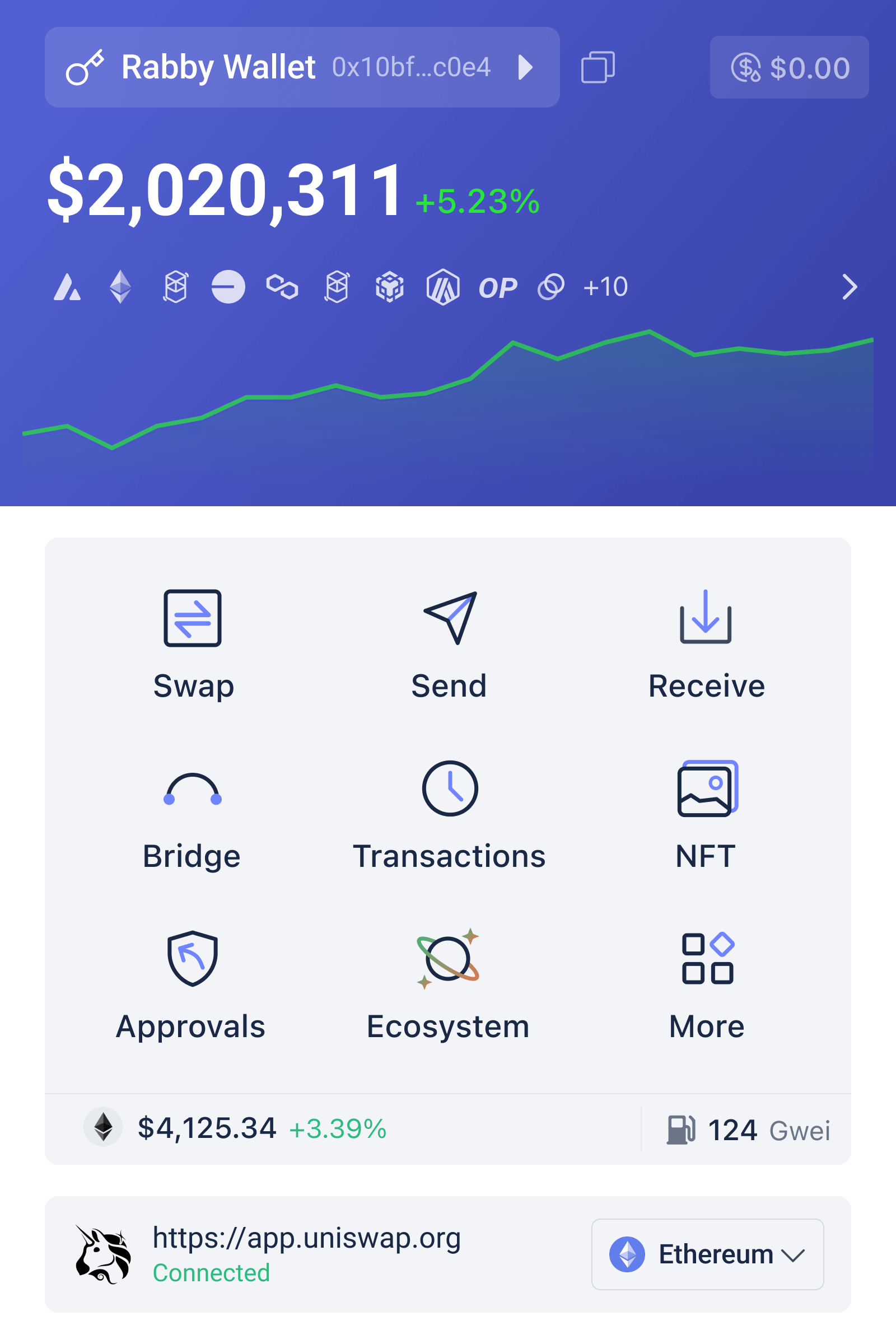
How browser wallets evolved from simple key storage
Early cryptocurrency wallets were often described as digital versions of physical wallets. The analogy was convenient but incomplete. A wallet does not usually store coins inside the browser; it stores or accesses the private keys that authorize changes recorded on a blockchain. The important operation is signing. When a user swaps tokens, deposits collateral, or grants an allowance, the wallet signs a message or transaction that a network can execute.
As DeFi became more complex, the basic “connect and approve” model became inadequate. One transaction might involve several contracts, token transfers, permission changes, and interactions across chains. A short hexadecimal destination address gives a user little practical information. Modern wallet design has therefore moved toward interpretation: showing what a transaction appears to do, identifying contract interactions, and warning when a request resembles a known danger pattern.
This is a meaningful improvement, but it changes the security problem rather than eliminating it. The question is no longer only, “Can the wallet protect my key?” It is also, “Can the wallet accurately interpret the contract call, and will I notice when the interpretation is incomplete?” That is why a wallet interface should be treated as an analytical aid, not an authority.
What a secure Rabby extension installation should accomplish
The installation process has a narrow but important purpose: establish a trustworthy path between the user, the browser, and the wallet software. Users should obtain the extension through a source they can independently verify, confirm that the browser is installing the expected product, and avoid entering a recovery phrase into any website, form, chat window, or support message. A recovery phrase is not a password-reset code. Anyone who obtains it can generally control the assets associated with it.
Readers seeking the installation path can review the rabby extension information, then verify the domain and the browser’s extension details before creating or importing a wallet. The link itself should not replace verification: phishing pages can imitate legitimate branding, and search results or advertisements can be manipulated.
After installation, separate the tasks of wallet creation, account import, and hardware-wallet connection. These are not interchangeable. A newly generated software wallet places key material in a browser environment, while a hardware wallet keeps signing operations isolated on a separate device. The latter can reduce exposure to certain malware risks, although it does not prevent a user from approving a harmful transaction on the device.
Recovery phrases are the central boundary
The recovery phrase is the boundary between access and loss. Store it offline, keep it private, and do not photograph or upload it. Cloud notes, email drafts, password managers, and screenshots may be convenient, but convenience expands the number of systems that could expose the phrase. For meaningful balances, many users should consider a hardware wallet or a carefully designed multisignature arrangement, while recognizing that operational complexity creates its own failure modes.
Why DeFi transaction security is harder than wallet security
Wallet security and DeFi security overlap, but they are not the same problem. Wallet security concerns control of keys, software integrity, device hygiene, and account recovery. DeFi security also includes smart-contract logic, oracle assumptions, bridge design, token permissions, governance incentives, and economic attacks. A perfectly protected key can still authorize a harmful interaction.
The most useful mental model is to treat every transaction as a request to change state. A swap changes token balances according to pricing and routing rules. A lending deposit changes collateral ownership and may create a claim on a protocol. An approval gives another contract permission to move a token up to a specified amount. Signing is therefore not a routine click; it is authorization for a state transition whose consequences may be difficult to reverse.
Transaction simulation and human-readable explanations can reduce this difficulty. They may reveal the expected assets sent and received, the contracts involved, and suspicious or unusual outcomes. Yet simulations depend on the information available at the time and on the ability of the tool to model the relevant contracts. They can be incomplete when contracts are upgradeable, when external market conditions change, or when a protocol uses complex and intentionally flexible logic.
There is also a subtle trade-off. More warnings do not automatically produce more safety. If users encounter alerts for every unfamiliar contract, they may begin approving messages mechanically. This is a form of warning fatigue. Effective security design must distinguish meaningful risk from mere unfamiliarity, while users must understand that “no warning” does not mean “no risk.”
A practical review framework before signing
Before approving a DeFi transaction, begin with the economic outcome rather than the technical label. Ask what asset leaves the wallet, what asset should return, whether the amount is plausible, and whether the transaction changes a permission rather than performing a one-time action. An unlimited token approval deserves particular attention because it may allow a contract to spend later, subject to the token’s rules and the approval’s scope.
Next, inspect context. Are you on the intended website? Did you reach it through a saved bookmark or a verified channel rather than an unsolicited message? Is the network correct? Is the contract interaction consistent with the action you initiated? A malicious site may present a familiar button while requesting an entirely different signature.
Finally, consider reversibility. A failed transaction may cost a network fee, but an accepted transfer or malicious approval may be difficult or impossible to undo. When the transaction is unclear, the rational response is to pause, investigate with an independent source, or test with a small amount. That approach is not a guarantee, but it limits the cost of misunderstanding.
The limits of extension-based protection
A browser wallet inherits risks from the browser and the operating system. Malicious extensions, clipboard manipulation, phishing, remote-access tools, and malware can interfere with the user’s environment. A wallet may display an address differently from the way a website displays it, and address-poisoning tactics can exploit users who copy from transaction history without checking the full destination.
Smart contracts introduce another boundary. Audits, open-source code, formal verification, and long operating histories can provide useful evidence, but none proves that a protocol is safe under every market condition. Audits may not cover later upgrades, economic exploits, governance attacks, or interactions with another protocol. Historical survival is evidence of resilience, not a promise of future safety.
Bridges and cross-chain applications deserve additional caution because they combine multiple trust assumptions. A user may believe they are interacting with one application, while the actual security depends on validators, message-passing systems, wrapped assets, and contracts on more than one network. The wallet can help explain the immediate request, but it cannot independently guarantee the entire architecture.
What to watch as wallet security develops
The next stage of wallet security is likely to focus less on hiding complexity and more on making consequences legible. Useful signals include clearer permission management, better distinction between approvals and transfers, stronger support for hardware devices, and warnings that explain why a request is risky rather than merely labeling it dangerous. If these systems improve, users may be able to make decisions based on economic consequences instead of raw contract data.
The unresolved question is how much interpretation a wallet should perform. Too little leaves users exposed to incomprehensible signing requests. Too much may create misplaced trust in a proprietary risk score. The most robust model is layered: the wallet provides technical context, the website provides application context, independent research provides protocol context, and the user retains final responsibility for authorization.
Frequently asked questions
Does installing a wallet extension make DeFi transactions safe?
No. It can improve transaction visibility and support safer signing practices, but it cannot guarantee the quality of a smart contract, protect a compromised recovery phrase, or prevent a user from approving a deceptive request. Security depends on the wallet, browser, device, application, protocol, and user decision together.
Should I use a hardware wallet with a browser extension?
A hardware wallet can reduce exposure of private keys to the browser and computer, making it useful for larger or longer-term holdings. It does not make every transaction safe. Users still need to verify the network, destination, permissions, and economic effect before confirming on the hardware device.
What is the most important warning sign during a transaction?
A mismatch between your intended action and the wallet’s displayed outcome is a strong reason to stop. Examples include an unexpected asset leaving the account, an unfamiliar permission request, an implausible exchange rate, or a request that appears to transfer control rather than execute a normal DeFi operation.
The central lesson is simple but easy to neglect: a wallet extension is not a shield around DeFi; it is part of the decision-making surface. The safest users do not merely ask whether a transaction can be signed. They ask what state will change, which assumptions support that change, how reversible it is, and what evidence would justify trust. That habit remains valuable even as wallet interfaces become more sophisticated.
